
Time for one more thing.
Working-class people are the busiest in America, but they are the ones leading community efforts and organizing for the future we need.

When I worked in a daycare, the hours were slow. The minute hand would click click click its way around to 5:30 PM, when parents started to arrive to gather their kids. The classroom would start to bustle with activity– moms and dads would file in, little Cayden would spread out all his paintings on the floor to show his grandma, I’d dig through the toy bin for a lost mitten, Kaleigh’s mom would apologize again for leaving a lunch box in the room over the weekend responsible for the ripe smell we had endured all day. 5:30 was a jumble of hats, gloves, coats, backpacks, prescription forms, take-home folders, envelopes stuffed with late fees, and doctors’ notes about allergies. It was the transition hour for parents between work and home, maybe with a grocery run somehow slid in between.
I remember one mom, the mother of a messy little three-year-old whose braids were always pinned up with a rainbow of butterfly clips, saying to me: “I just don’t have room for even one more thing.”
Working-class people rarely do. Jobs, errands, home repairs. Children, elders, the grass is too long, the oil needs changing. Everything feels like a litany; like we are riding under the crest of a wave. There’s barely enough time to make dinner, let alone catch up with the neighbors. There’s no wiggle room in our budgets; one more bill or flat tire can make everything come crashing down. No room for even one more thing.
Over the last year of writing Working Class Storytelling, I’ve been struck, then, by how many working people are doing more things– many more things. In a year where we’ve all been begging our elected leaders to do something– do something about the economy, do something about healthcare, do something about housing– it’s been working people who have taken on the work.

I think about busy moms like Jeneva and Nicole in Roswell, New Mexico, who used community organizing to get new homes onto the rental market, and about Casey in Three Rivers, Michigan, who harnesses the goodwill of her very poor community to help supplement the local government’s faltering safety net. Casey drives people released from the hospital to shelters in other counties, hours away – and does this in between bouts of chemotherapy. She seems always to be doing one more thing.
The meltdown of our infrastructure and systems is too big to ignore, and working class people feel the urgency. Michaela, living in an RV in the Chaves County desert, went back to school in her 60s to become an EMT so she could create a free EMS service, and Jocelyn, a single mom who works a radio station, collects and redistributes food to her neighbors on her days off, even as her own SNAP benefits are being cut. Moms in Pennsylvania, between the carpool lane, second jobs, and an hour on the phone with the insurance company, are showing up and organizing for paid leave and childcare.
People who work and organize in politics often discount poor and working-class people, saying that we have to make things “easy” for working people to be involved, or they won’t engage. Let them send a form email, sign up for another email list. Send them a mailer telling them who to vote for; hold the meeting on Zoom, not in person.
While I appreciate the recognition of how jam-packed our lives are, I think we are misunderstanding how dire working-class people know things to be– and how ready we are to build the futures we need; how willing we are to do one more thing.
Mandy in Bend, Oregon, was evicted from national forest land and weeks later was already working with her elected representatives to protect another homeless community from the same fate. Instead of spending their retirement years fishing and bowling, seniors in Wisconsin are banding together to protect quality care. Casino workers in Indiana are putting their jobs on the line, picketing for a union (they won, by the way).
Not one of these people had room for one more thing– but they are doing it anyway. They know what’s wrong and have a good idea of how to fix it; they can’t and won’t wait around for the rest to catch up. If you are looking for the heat in America in 2026, I say look at the people who have been forced closest to the fire and follow them. I’ll be writing about them here.
My favorite three working-class stories from 2025
One of the most surprising stories of ingenuity was this one I was led to in the southern New Mexico desert.
Relationships and Trust
·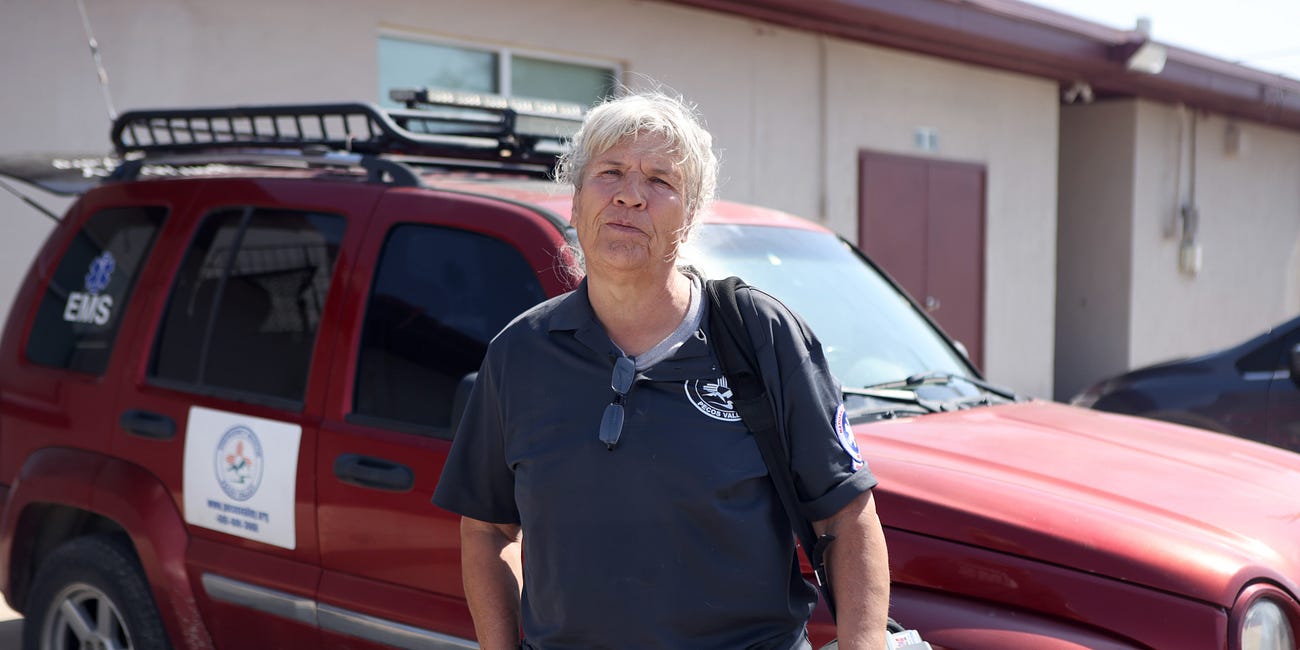
It’s early, but a small group of men and women is gathered on the hot sidewalk outside the Roswell Salvation Army, hugging close to the building’s wall, standing in its small strip of shade. The sun has only been up for two hours, but it's already hot as Hades. Breakfast will be s…
2. This story out of California shows the power of organizing and how easy it is if you follow the lead of your neighbors:
"This will all catch up with him."
·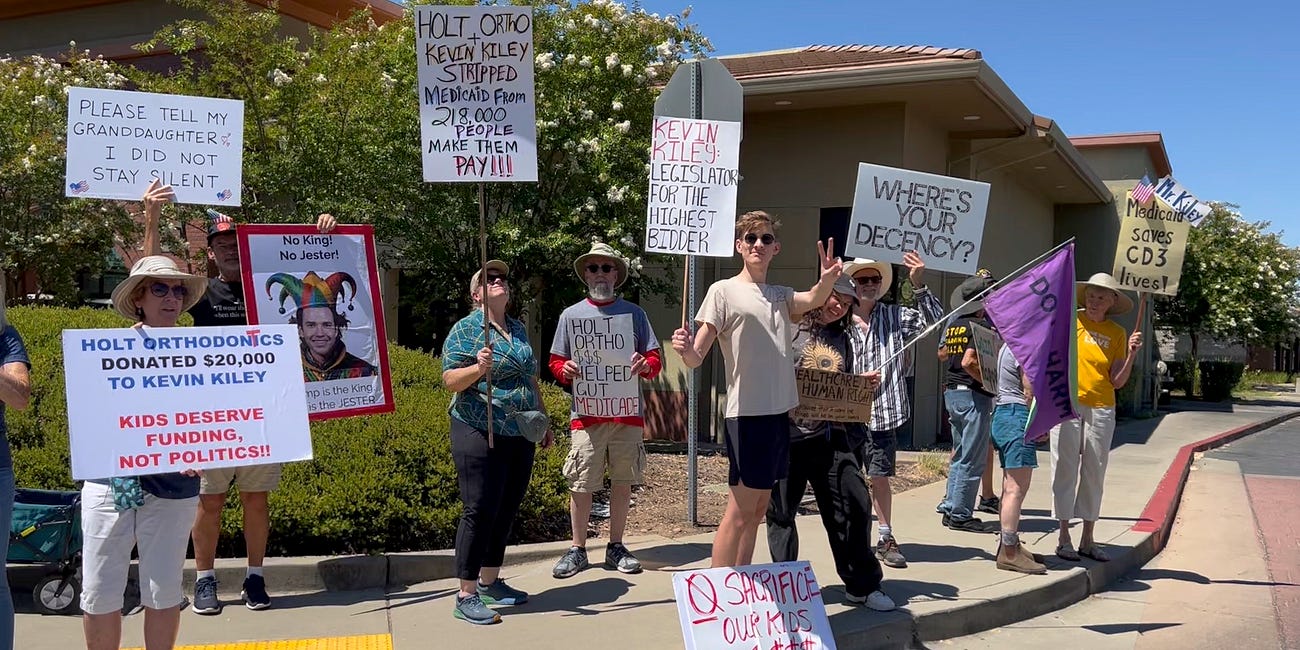
As a kid, Paul Huntley tagged along with his mother, knocking on doors for Eugene McCarthy in their Iowa City precinct. It was the 1960s; his parents wer…
3. And finally, this story out of Colorado really defined the moment we are in— and why class-based organizing matters.
Public Money, Private Benefit
·
Antonio Molina-Haro is like a lot of young men his age: He hangs out with his friends on the weekends, he’s enrolled in a local college, he works regular shifts at the local Chick-fil-A. “I’m making $19 an hour,” he says. “It’s the best money I’ve ever made.”


“Let them send a form email, sign up for another email list. Send them a mailer telling them who to vote for; hold the meeting on Zoom, not in person.”
THAT PART! If you’re working class in a rural area being invited to an email list is about the only engagement you can expect from any entity on either said of the political spectrum.
Doesn’t surprise me at all, more often than not it is those with the least to give that are the real helpers and givers. I’m also shocked not shocked that we now have the verbiage ghesstopo trying to dismantle other necessary and needed programs such as head start, social security, Aca and other programs but gosh forbid billions upon billions can go elsewhere such as the military industrial complex and others that can’t even pass an audit. Again g d forbid the least of these and families get some assistance perhaps they can visit the new fake guilded White House or ballroom now and say please sir I want some more as all the other fake phony cronies have, screw we the people. The oxymoron’s of who really are the disabled ones mentally, morally, ethically etc etc etc is beyond any reasoned sense. This one got me too as one who predicted they’d do this in 2016 among other things it still assaults every bit of goodness that I have. They have and are nothing imo make America great again my ass. What you did and do to the least of these. Take that and bank on it too.