
Seen Better and Know Better
Seniors in Wisconsin have a lifetime of knowledge to draw on as they build a movement to make their state better for growing old.

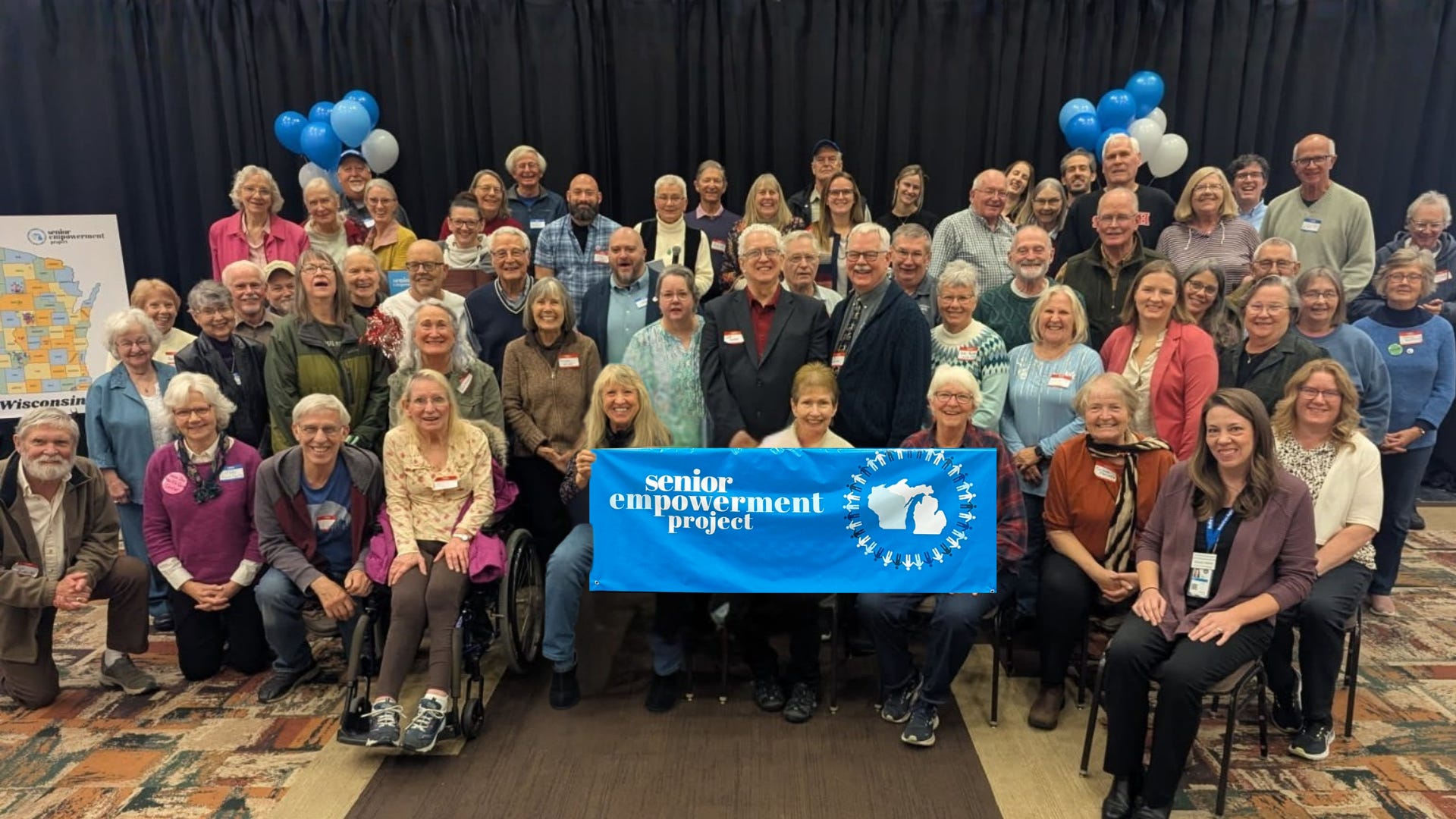
The November wind is no joke in Wisconsin, but the people filing into the Holiday Inn in Stevens Point pay it no mind. They hang up their coats by the door and greet each other as if old friends.
Many of them are old friends. They are now men and women in their 60s, 70s, and 80s who have spent most of their lives in the small towns and rural areas of central Wisconsin.
They’ve come for the Wisconsin Senior Summit, and the hotel ballroom is filled with retirees. Judy Brey, a retired teacher, hands out candy to encourage participation. Eileen Guthrie, retired from accounting, keeps everyone on time.
After you retire, Scott Doerr tells me, “It’s time to relax and sit back and enjoy yourself a little bit. You shouldn’t have to worry about things!”
I smile and point out that he and his wife, Linda, have been running back and forth all morning, helping to set this event up. Everyone here is very, very busy. They don’t seem like they are doing a great job relaxing, I say.
“No, I guess not,” Scott laughs. “There are just too many things – and people– we care about.”
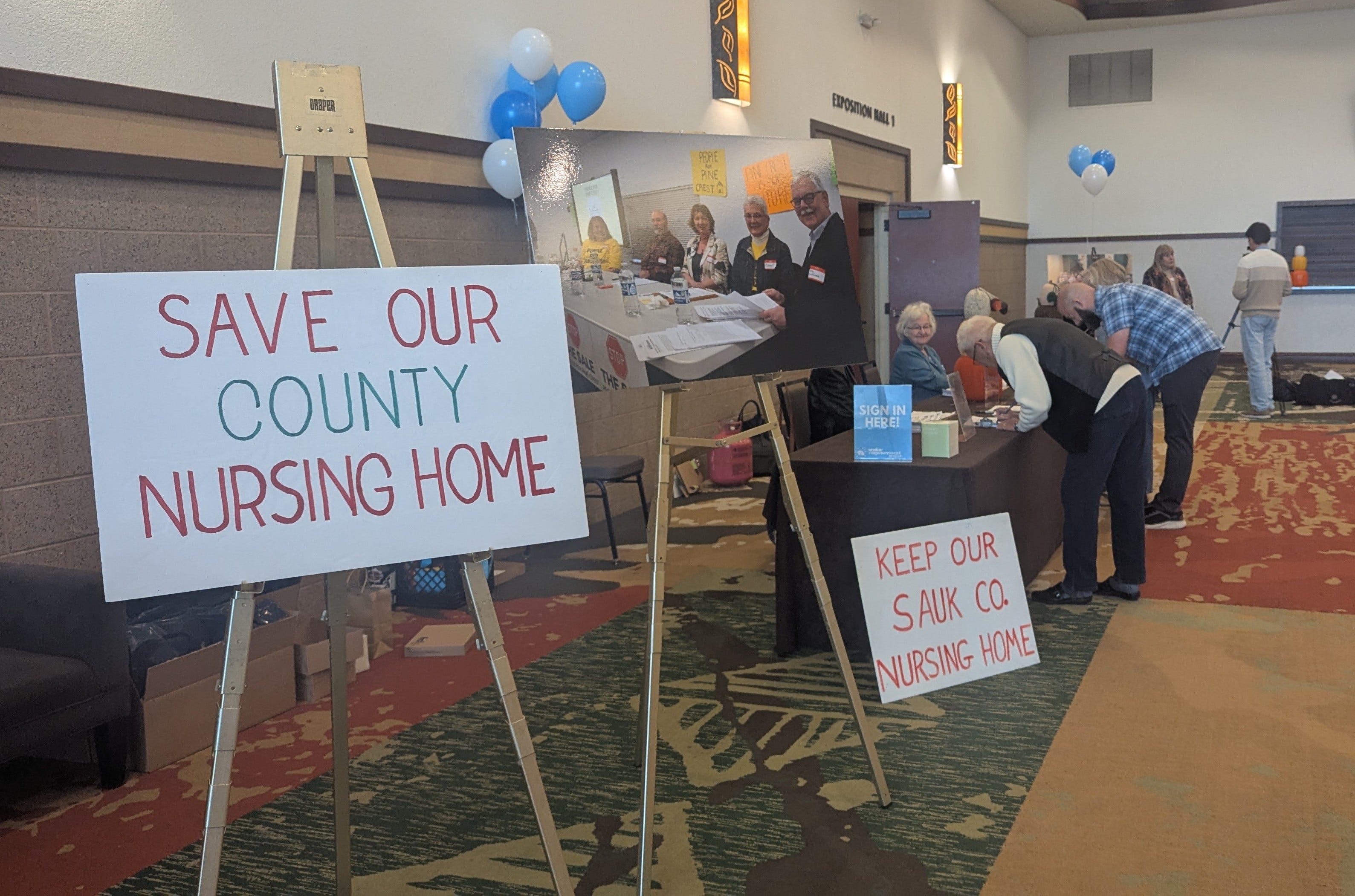
Relaxing and not worrying about things isn’t exactly how things have ended up for most Wisconsin elders. Instead, they’ve found themselves fighting for things they thought were a given. Medicaid and Medicare benefits they’ve paid for across their lives are being taken away in favor of tax cuts for the rich. Threats to Social Security loom like dark clouds. Instead of summer fishing and evening bowling, seniors here are often working part-time jobs to supplement their retirement, selling the homes and farms they’ve owned for decades, and pinching pennies to afford basic needs.
Tom Kriegle drove up to the Wisconsin Senior Summit from Sauk County. He grew up on a dairy farm and had a career as an agricultural economist; he helped family farms navigate new unknowns as large-scale operations began to dominate the landscape. Tom’s a numbers guy; knowledgeable and practical. “Most things can be planned for,” he explains about agricultural economics, “but the weather is always unknown.”
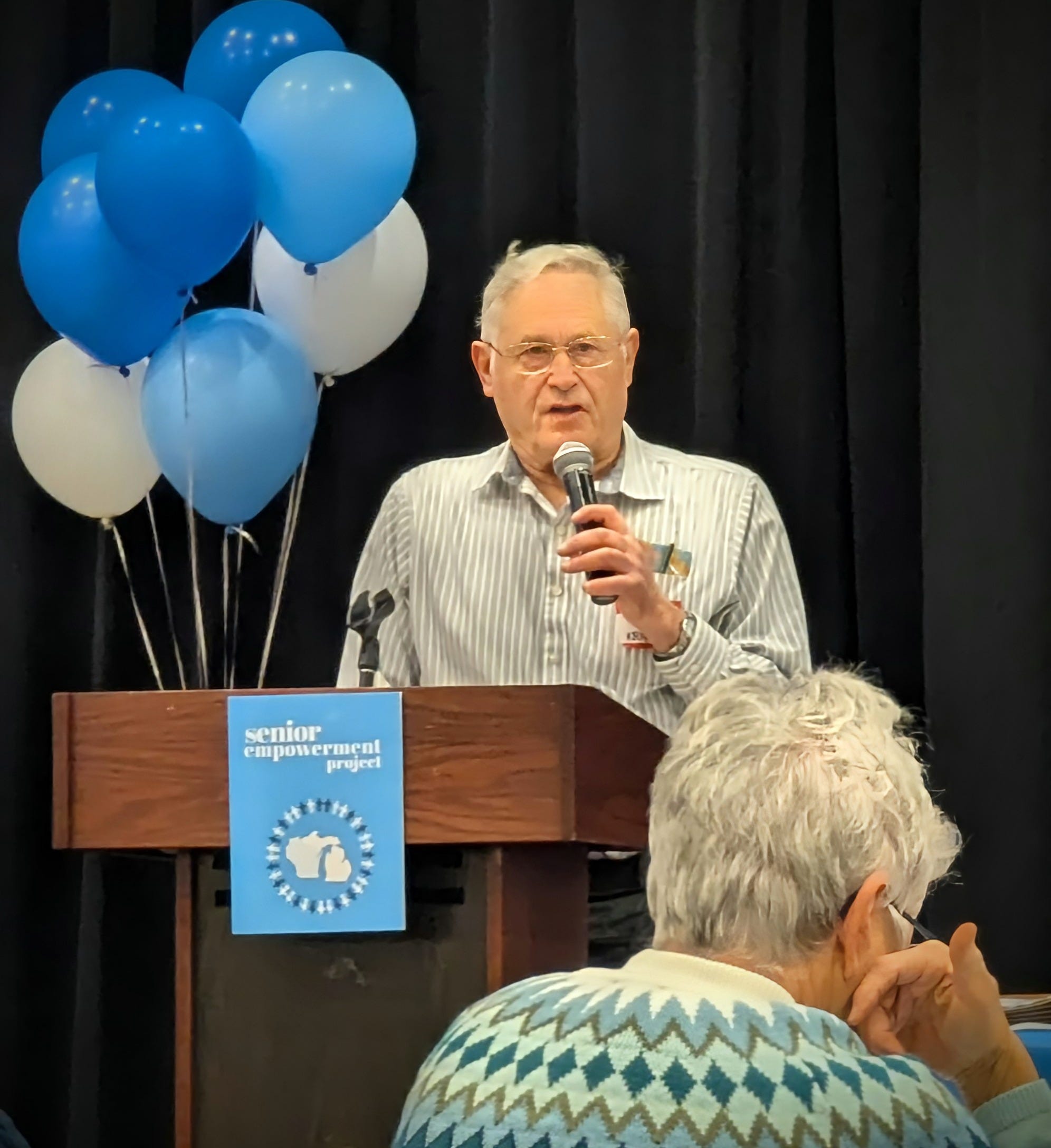
As he talks, it strikes me that most of the people in the room are practical, level-headed midwesterners like Tom. They are no-nonsense people. They may not have ever made a lot of money, but they responsibly planned for their retirements. But they couldn’t have imagined the conditions they retired into — this world of astronomical healthcare costs and a time where a carton of eggs can cost five dollars. They saved and planned, but this weather was not just unknown; it was unimaginable.
“My husband and I have given to society, and we mostly haven’t really had to use it,” says Eileen, reflecting on how they paid their taxes and believed in the system they were paying into. “But when I retired, we used the Affordable Care Act, and that allowed me to retire with less costs. Now they want to take that away, and that’s not how you build a society that is caring instead of mean and grumpy and nasty.”
“One of my biggest pet peeves is when they’re talking about cutting Medicare and Social Security,” says Scott. “My employers and I contributed a lot of money into that fund. You know, that’s money we paid for along the way, and it would be solvent if the richest 1% of people in the country paid their share of taxes, too. I always expected that since we’re paying these taxes, and these are the things we want and we need, and the government should provide some help.”
“The government is supposed to be for the people,” he continues. “And I say supposed to be because it don’t seem that way anymore. I think the government lost its way.”
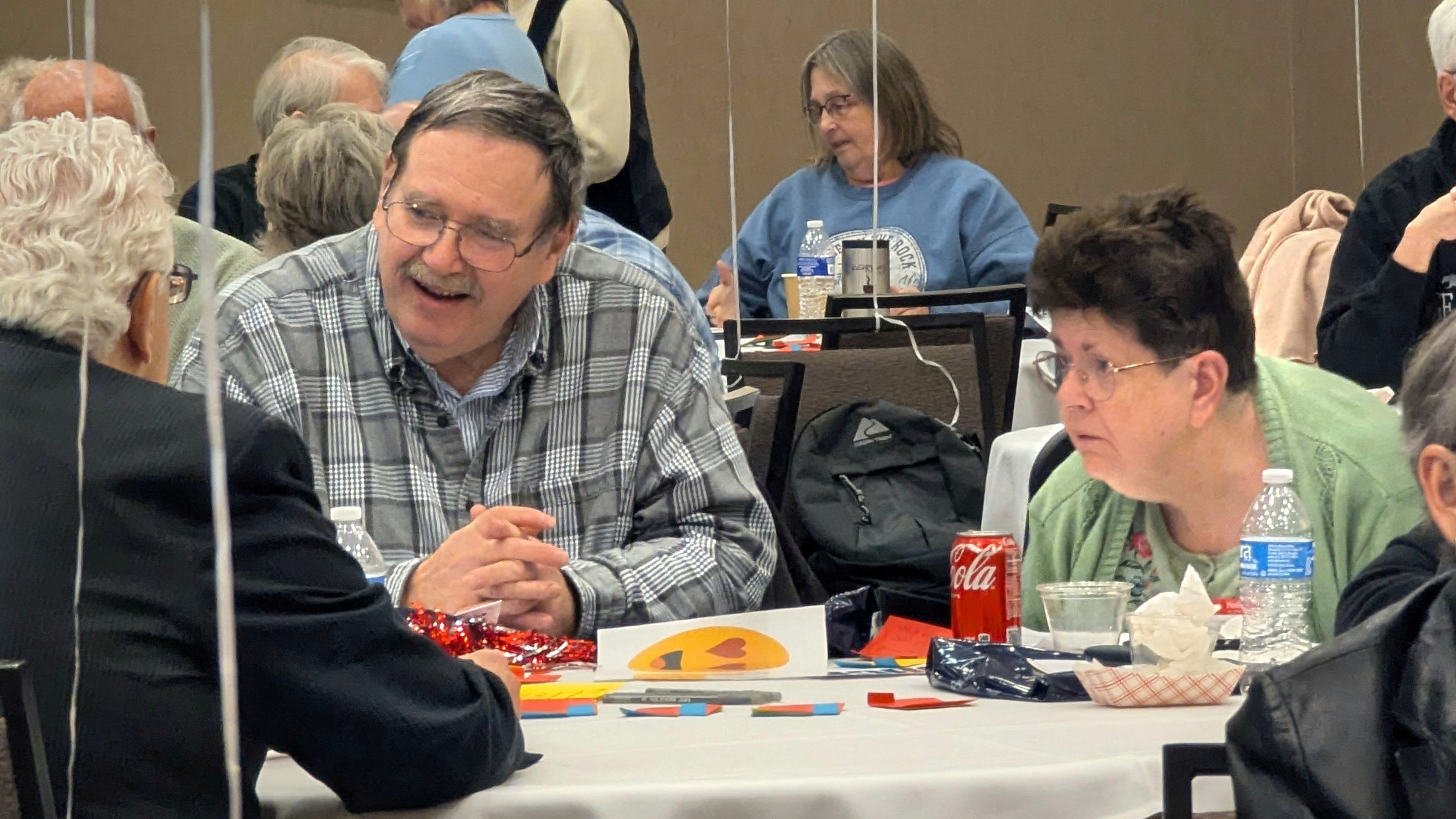
The people gathering at the Wisconsin Senior Summit believe they can help their government find its way again. They want to lead their local lawmakers down a path that leads to good outcomes for ordinary people, not just profits for stockholders.
Over pastries, ginger ale, and coffee, Summit attendees are here to create a Senior Agenda together —one that will highlight the most pressing needs of the state’s aging population and position them as the changemakers Wisconsin needs.
“A lot of times people think that just because we are retired we no longer contribute,” says a gentleman wearing a sweater with elbow patches.
“Or because we forget things!” laughs his wife, who is rummaging through her purse looking for her glasses.
“But as long as there are needs and we are still here, we can still help.”
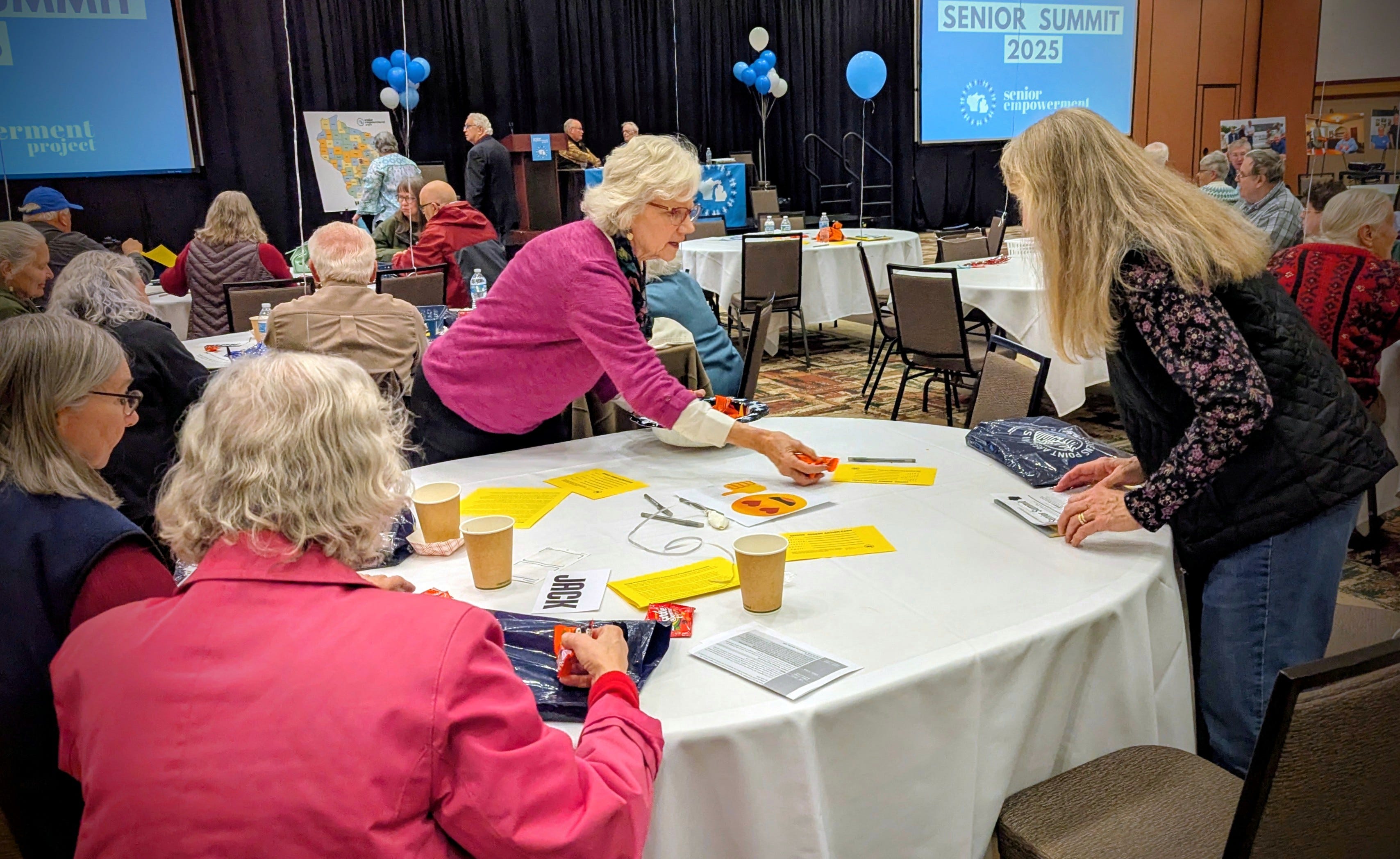
One of the day’s speakers, Coach Jack Bennett, refers to this as “the fourth quarter of life,” drawing chuckles from the room. Everyone here recognizes not only the time that seniors have to contribute, but also the skills and knowledge they each hold.
Eileen is widely credited by her peers as the brains behind last year’s tracking of their county-owned nursing home finances, showing that the home was making money, not shedding it as many of the county board members claimed in order to rationalize its sale. Tom is particularly savvy at researching and digging up data. Nancy and Joe Roppe of Portage County seem to not only know everyone in the region but also have their phone number (they are the ones who invited Coach Jack to be here today).
But beyond knowledge, skills, and time, these seniors have something even more important: They have skin in the game.
For many of them, the situation is dire. One man’s wife needs a new brace, which will cost, even with insurance, $38,000. Now they can’t replace their rusting car. Another woman is trying to figure out how to stretch her dollars to cover the cost of housing for her retired years– the table she sits at discusses the concept of “granny pods.”
The room is full of ideas. A group from Walworth County shares how they are campaigning to add childcare to an unused wing of the county nursing home to build intergenerational support of high-quality care. Another group shares an update about how they, so far, have been able to prevent the sale of their county-owned nursing home. Others discuss how they can support the Health over Wealth Act, recently introduced in Congress.
Based on the conversation and enthusiasm in the room, “fourth quarter” seems to be where the action is.
Over the years, I’ve attended hundreds of organizing meetings and listening sessions– from Vermont to Nevada to my home state of North Carolina. I’ve heard working-class people talk about their concerns and needs. I’ve seen working people cut issues and launch campaigns. But in the Holiday Inn in Stevens Point, there is something happening that I don’t get to see everywhere. The seniors in this room have a sense of hope for the future that is grounded in a concrete knowledge of the past.
I grew up in a defunded and gutted America. I barely know anyone of my generation who is in a union; the newspaper that used to connect my neighbors no longer prints daily and is only a few flimsy pages thick. I sent my son to a school with a hole in the gym’s roof and where the most recent civics book lists George Bush as president. The tract homes that were built when I was a teenager are already collapsing, factories from my hometown moved long ago to Mexico, and, regardless of productivity increases, real wages for working folks have been flatlined since I was a baby.
In contrast, the seniors in this room have been a part of a more vibrant– and affordable– America.
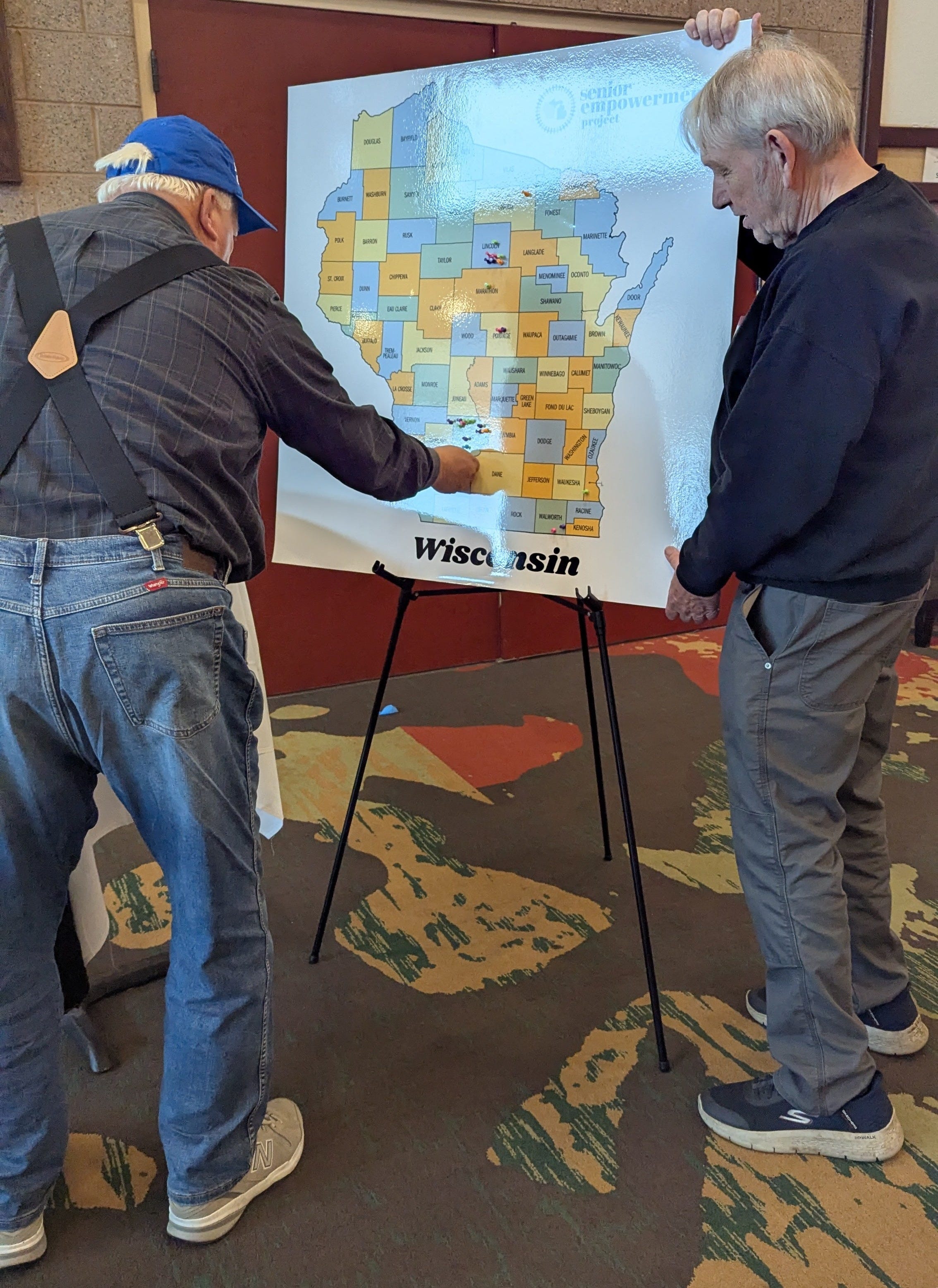
Dora Gorski explains that more is possible than we can imagine. “It’s not all pie in the sky,” she says. “When I went to school at UC Berkeley, in Berkeley, California, I went to one of the best schools in the nation, and it cost me $125 a quarter. My books cost more than my tuition, and the state was able to afford to support the schools.”
“So it’s a choice,” Dora continues. “It’s a choice by the government, it’s a choice by the community of what they want to put their money toward, and I know that because I’ve seen us make different choices and I’ve seen the positive outcomes of those choices.”
Like Dora, Eileen remembers a time when things seemed more stable and hopeful. “I have seen communities work well … on a local basis and federally. I think I took it for granted. I think I took being able to find a good job for granted. I worked at it, we all worked hard, but it’s like we climbed this hill. We never got to the peak, but we climbed the hill. And then things started to go downhill.”
Downhill for Wisconsin looks like private equity firms buying up hospitals and nursing homes, social programs like SNAP and Medicaid being stripped of funding, and elected leaders embracing bare-bones austerity that creates scarcity and pits neighbor against neighbor. In Eileen and Dora’s eyes, this is untenable. These conditions are not “just the way things are.”
They’ve seen better. They know better.
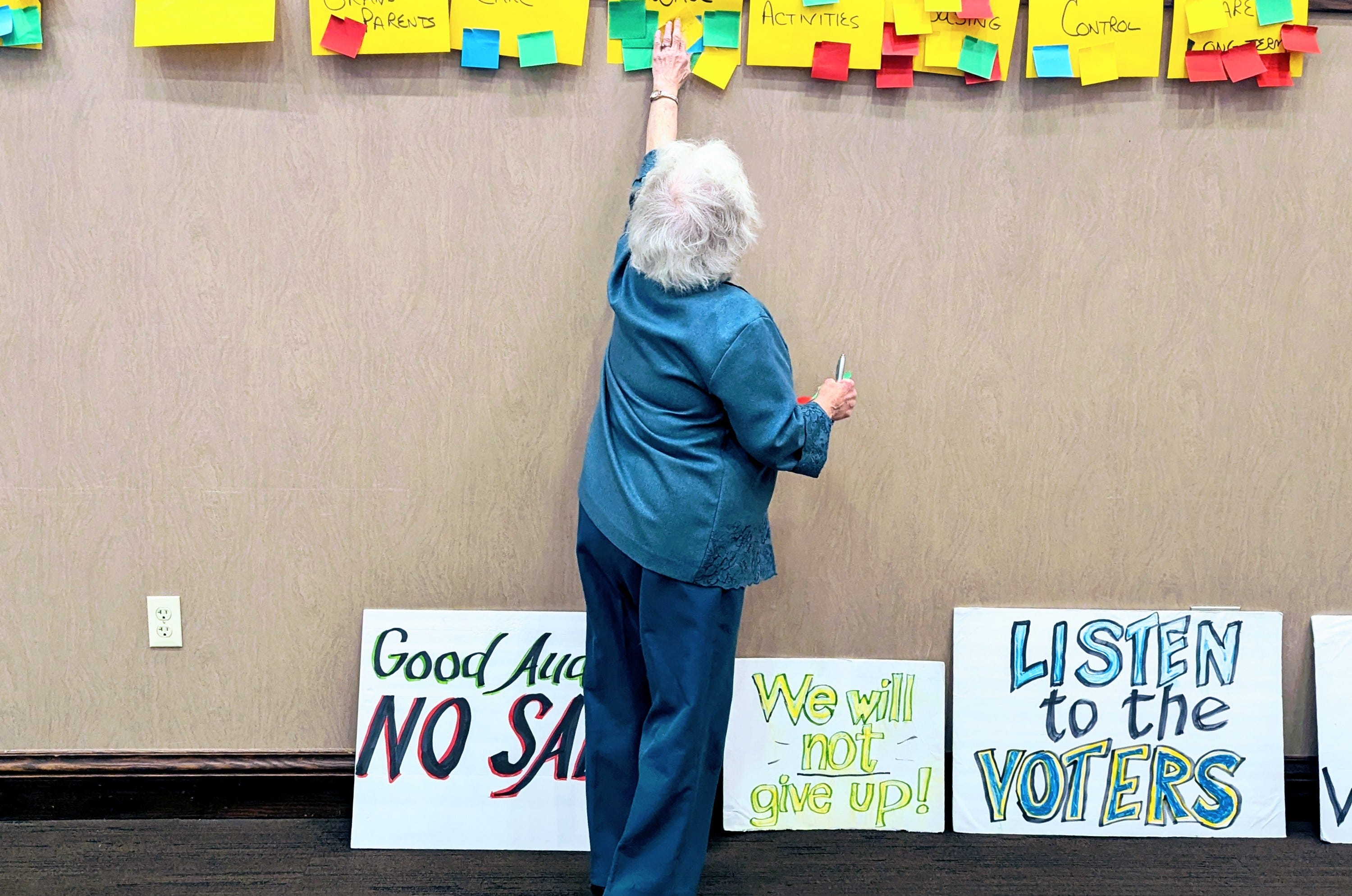
Listening to these elders lead workshops on how to fight the privatization of nursing homes, how to organize to protect Medicaid, Medicare, and Social Security is powerful. They are each drawing from a deep well of history– they aren’t just starry-eyed. Their vision of a world where each of us can grow old with dignity, with the care we need, and in the communities we choose to live in is attainable; it’s within our reach.
They’ve seen it before, and they have a good idea of how to get there again.
No one is sugarcoating the past– they know things weren’t perfect. Winters have been hard, farms have been sold, and injustices have always been there. But they also know what can work, what we can do, what we can ask of our government — and each other.
“The hardest part is to say: We aren’t done yet!” says Dora. “We can’t be done. We’ve got too much work to do!”
The framing of these seniors having seen better is so poweful. Too often younger generations are told that struggles are inevitable, but these organizers have actual memory of when college cost $125 a quarter and communities functioned. That historical knowledge becomes organizing fuel. The intergenerational childcare idea is brilliant, solving two problems while building coaltion support.
New subscriber. Found you through a couple FB clicks! I’m From Oro Valley, AZ and am part of Indivisible Tucson Action Alliance.