
Lessons in Power
Even as the rules feel rigged, Morgan Nudelman and her neighbors are determined to hold a big outside developer accountable to local needs.

“I don’t want the prices to go up for my kids who go to the waterpark,” Morgan says, thinking of her students. Most of them come from families with tight budgets – a trip to Greeley’s Family Funplex to plunge down the slides and splash into the pool is a delightful treat in the summer heat. As a facility owned and operated by the city, it’s also affordable.
The Funplex has no plans to raise prices. But Morgan Nudelman’s concern isn’t entirely hypothetical; she’s got good reason to be worried. The Greeley City Council has recently made an expensive gamble on a millionaire’s pet project– and if it doesn’t pay off as promised, the Funplex could get caught in the crosshairs.
That’s because Greeley’s City Council put the Funplex, the IceHaus, the fire department, and even their own City Hall up as collateral to fund a new “entertainment complex” on the outskirts of town. The complex, known as Cascadia, would house millionaire developer Martin Lind’s hockey team. Cascadia would also be built by Lind’s development corporation, but would be paid for by taxpayers like Morgan.
Morgan has been a part of a growing opposition to the project, specifically how it’s being funded and how her city leaders have approached the deal. “The people who are going to be affected by this in the long term, the people holding all the responsibility, that’s us,” she says, explaining how local residents are being put on the hook for the project. “If we are going to pay for it, we need to know we benefit.”
The success of Cascadia is hardly guaranteed. If it fails, real, tangible impacts would be felt throughout the town. But even if the project does work the way Lind promises, the benefits would hardly be felt by the working Greeleyites, who overwhelmingly can’t afford the type of high-end entertainment Cascadia will offer.
This summer, Morgan, along with many of her neighbors, circulated a petition asking for the public to have input on how their city proceeds. Too many people– including Morgan– didn’t know anything about Cascadia until after it was approved. They were told that if they could get 4,563 signatures, they could get the “Cascadia question” onto November’s ballot. They blew past that threshold, submitting nearly 9,000 by the August 6th deadline.
Their effort was astounding. The number of residents wanting to weigh in, irrefutable.
The signatures collected were validated by the city clerk, and the petition was certified. Everyone’s hard work to demand a say on Cascadia was entering the home stretch.
And then the City threw it away.
Big money had gotten involved. A PR firm created an opposition group to challenge the legality of the citizens’ petition; they held their first press conference the very morning the successful petition was turned in. Now the petition is tied up in a slow-moving court. As the clock ticks down to election day, only one thing is clear: Cascadia won’t be on the ballot.
This was a huge blow to Morgan. “It’s like they don’t trust us, the people who live here, to vote or to know what we want,” she says. Nothing could be less true: From her conversations while helping circulate the petition, Greeleyites have great visions, ideas, and desires for their town. They want things like better bus transportation, including bus shelters, improved parks, and more affordable housing.
But the City Council won’t listen. “Instead, they have tried everything they could to discount what we did and what we say.”
That will come back to bite the current City Council. Morgan explains that the effort around circulating the petition this past summer not only shed light on the non-transparent Cascadia project, but it also “brought a lot– I mean a lot– of people together.”
The way Cascadia was approved, the City’s response to the petition, the continued prioritizing of wealthy businessmen over working people has eroded trust between the residents and their government. Morgan worries that future City Council actions will not be trusted, even when they are good or necessary. “This distrust will leave a lasting legacy for the current mayor and city council members.”
Even without the Cascadia question on the ballot, the community is now focused on the upcoming election. “Now it’s about building up local leaders. Most of these seats have gone uncontested in the past, but because of this project, people have stepped up to run, and voters finally have options.”
Working people, the overwhelming majority in Greeley, need to act together if they want to defeat monied interests like Martin Lind’s Cascadia. Morgan says the town needs more than a petition, but a full-on power shift.
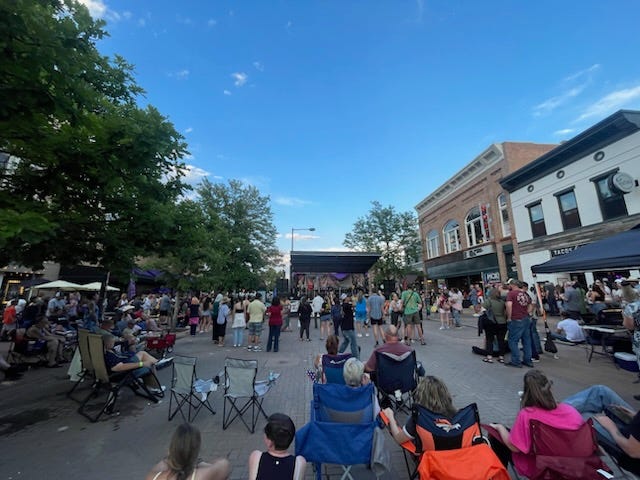
The last few months have been a lesson in power: who has it, who is trying to hoard it, and how regular people — teachers like Morgan, her students’ families, the working folks of this town — go about getting it. Even when they put in the work, followed the rules, dotted all their i’s and crossed all their t’s— the big money still figured out how to win. It’s not fair, but it’s also not the end.
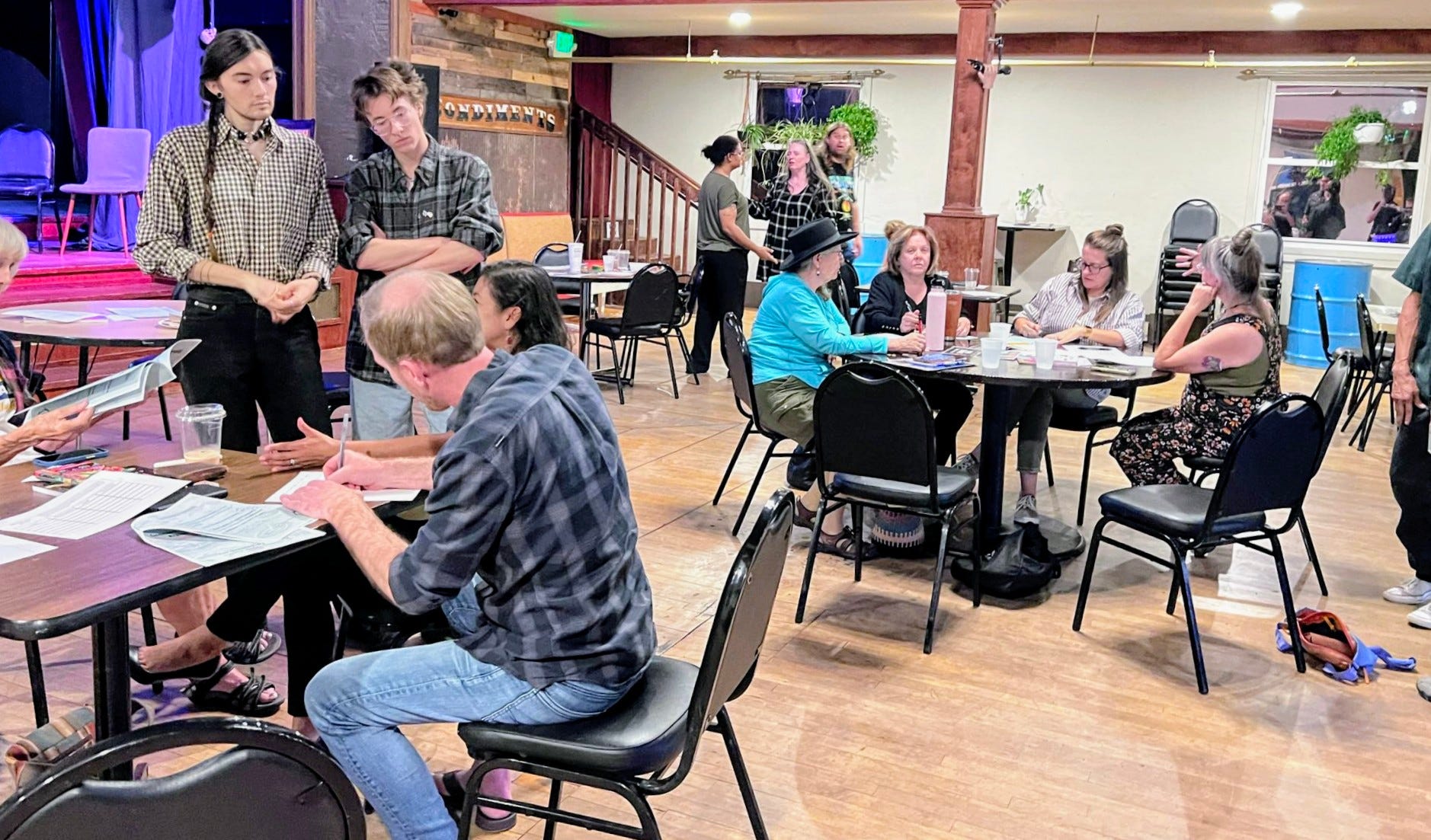
Greeleyites continue their fight against this corporate giveaway. Working people may not have the same financial resources as a development corporation, but there are levers they can still pull. While Martin Lind broke ground on Cascadia last week, a new petition drive has started to challenge the zoning. New candidates are running for local government on platforms that emphasize transparency and encourage civic engagement. And, just this week, dozens of local residents gathered to begin work on a Community Benefits Agreement with Lind’s company, a binding contract between the developer and residents that locks in the promises being made. A Cascadia CBA would guarantee good-paying jobs with health insurance, affordable housing investments, local hiring and contracting, and protections so places like the Funplex don’t have to raise prices to cover developer mistakes.
Greeley has become a hotbed of civic engagement and local organizing: Perhaps that’s something they can thank the city’s pandering to an outsider millionaire for?
Morgan loves Greeley. “It’s the hardest-working, ride-or-die community,” she says. She loves her school, her students, walking downtown. She’s going to fight for it, and she now knows her neighbors will too. “I am so sick of these outsiders saying “Greeley needs to be better or move forward” as if we are behind. It’s an insult to our amazing community.”
If Cascadia is going to be built using the town people’s money, then the project should guarantee the things people need here. She and her neighbors are ready to go to the table with Martin Lind and hash out these demands.
Will the members of Greeley’s City Council stick up for working people and go with them?
Interested in learning more about what’s happening in Greeley? Read this earlier story about other local residents fighting the millionaires.
Public Money, Private Benefit

Antonio Molina-Haro is like a lot of young men his age: He hangs out with his friends on the weekends, he’s enrolled in a local college, he works regular shifts at the local Chick-fil-A. “I’m making $19 an hour,” he says. “It’s the best money I’ve ever made.”
These are beautiful stories, thank you. I really admire that civic engagement. There’s a way to address that seemingly endless corruption though, to create a way of life without unaccountable authorities and wealthy interested undermining people’s good work.
There are whole nations that live this way, where integrity and generosity are common. Many more existed in the past 200 years. Justice and trust are normal and widespread as there is no corrupting unaccountable leadership, and everyone is expected to uphold the laws as needed. I got to spend time with one such healthy nation in 2015 and it was absolutely amazing.
For anyone interested in learning what freedom is really like, and what it would take to get there, studying healthy nations is critical. Unhealthy nations only ever have performative democracies at best.
There is a free book available at https://thedeepestrevolution.com (called the The Deepest Revolution) which explores in detail what healthy nations are like and why so many of us are stuck in unhealthy ones, generation after generation. It also explores in practical detail what it would take to make a new healthy nation without a ruling class, based on the stories of people who have done it before.