

Knowing Something Better in Your Bones
We often dismiss senior citizens as outdated and out of touch, but their knowledge of the past could serve our future movements for the better

My dad usually keeps his emotions close, tucked up under his flannel shirt. That’s one reason why I’ll always remember the day he was playing on the floor with my toddler and looked up to say: “There should be a Grandparents’ Party. You know, like a political party, but for grandparents.”
My dad explained that growing older and becoming a grandparent has made him think about what the world should look like, not just now, but long after he is gone. Embracing this protracted view, he reasons, can change how people think about government and policy for the better.
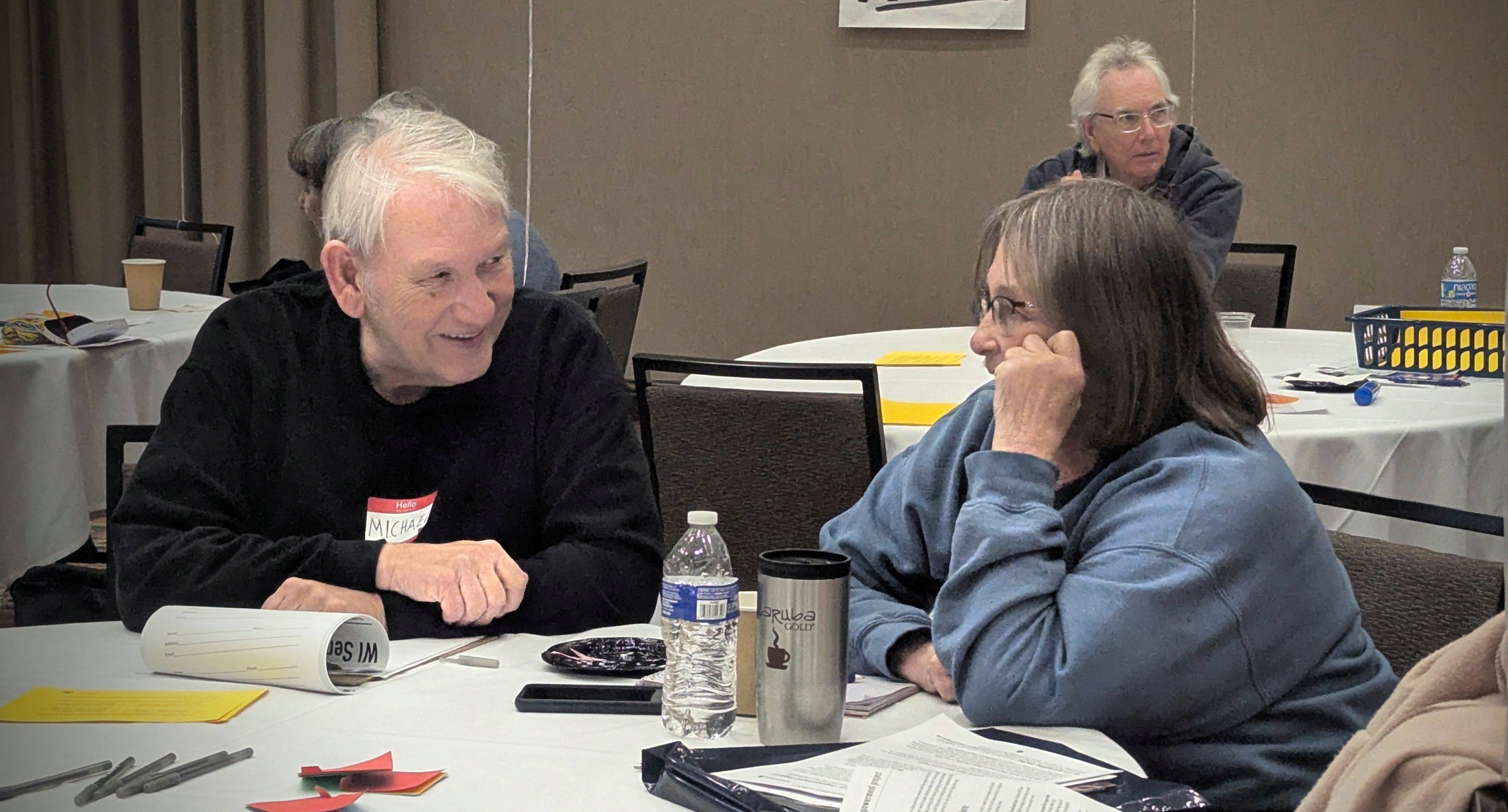
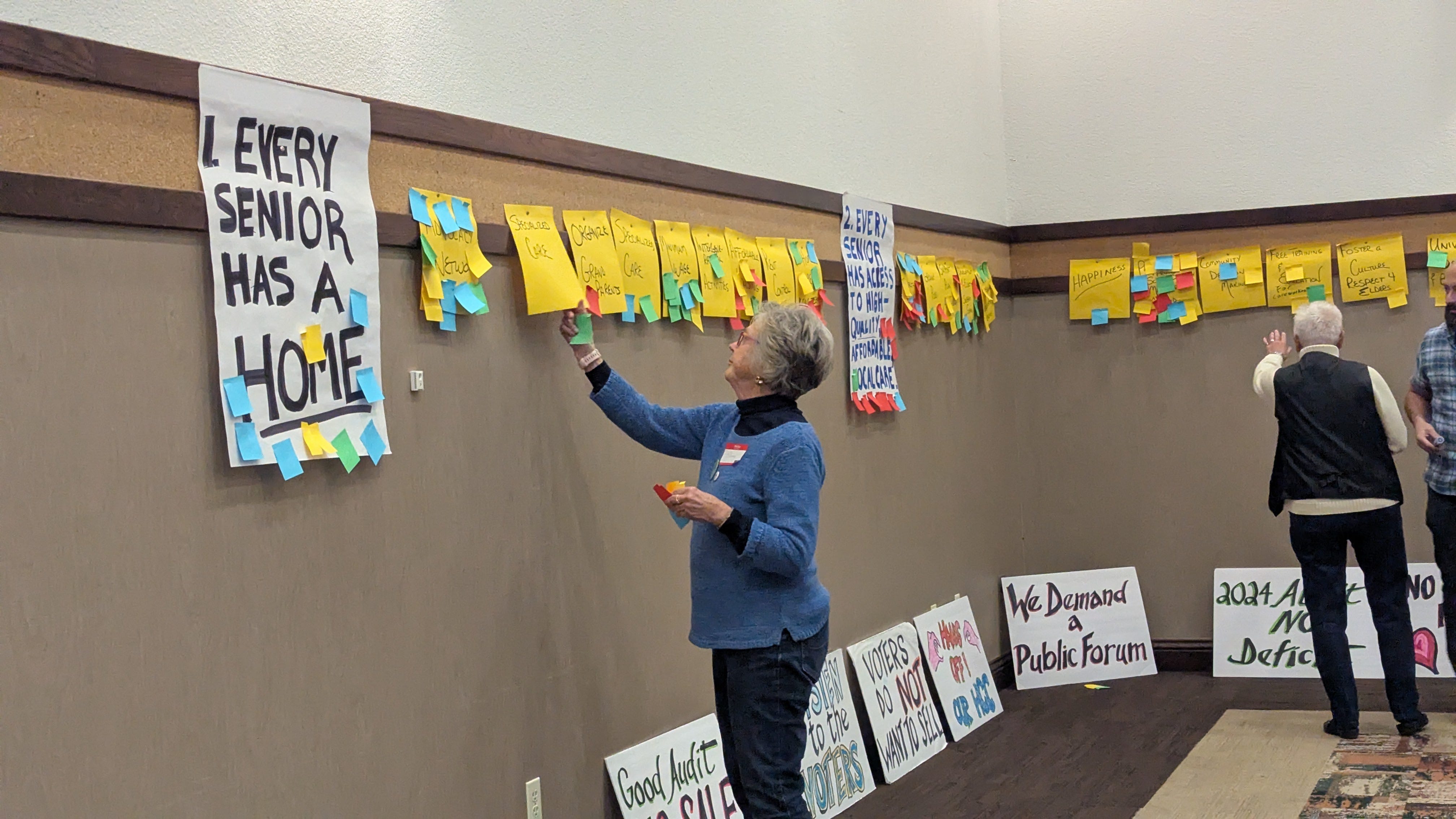
I was thinking about my dad’s “Grandparents’ Party” as I met with members of the Midwest Senior Empowerment Project—a multi-state group that organizes around senior housing, nursing homes, protecting Medicaid and Social Security, and other issues related to aging well and with dignity. The seniors who run the group are not only doing meaningful organizing, they’re doing it with noticeable clarity and consideration for the decades ahead.
Like my dad, these older organizers have honed in on the future and on building a world that will work for generations to come. But many of the people I spoke with are also thinking about the past.
Seniors get a lot of flak for harping on the past. We roll our eyes when they say, “Back in my day…” But when it comes to politics and organizing, their memories add important context and meaning to the “long view.”
Sitting in her living room in Wausau, Wisconsin, retiree Dora Gorski, now in her late 70s, told me about leaving home for college as a young woman. “I was able to go to one of the best schools in the nation, and it cost me $125 a quarter. Back then, the county and the state could afford to support the schools. The junior colleges were free, so that when somebody graduated from high school, they had a place to go to get the skills to get a job,” she said.
“I had a wonderful doctor, and we were talking a little bit about this. She graduated with her doctor’s degree… All she owed in loans was about $5,000. We could say that’s just not possible today, but it is possible if it’s done right.”
Up the road in Merrill, Eileen Guthrie also ponders what is possible based on her knowledge of the past. A retired county bookkeeper, Eileen has observed the inner workings of local government firsthand. “I have seen communities work well not just on a local basis, but also federally. I think I took it for granted,” she explained.
Recently, the Lincoln County Board of Supervisors voted to sell their publicly owned nursing home to a private buyer—a choice they rationalized by saying the facility was not making money. Eileen dug through the books and found that the nursing home was in the black, not the red.
To her, the sale was about ideology, not economics. “It’s a philosophy. Instead of believing the most important thing is to care for people, they believe it’s to make money. The new ideology thinks the worst in people instead of the best in people, or won’t give people opportunities that they deserve,” she said. “We used to have no problem ‘affording’ these things, but it was never because we were wealthy, it’s because we were making different choices.”
Today, both women live in small towns in rural Wisconsin. In these places, there’s a shortage of doctors and caregivers, college is out of reach for many young people, good jobs are hard to come by, and schools are being gutted. But Dora and Eileen know better things are possible—because they’ve happened before.
Neither of these women wants to sanitize the past. They know there were problems and that systemic barriers remain. But they hold memories that most of us simply don’t and can’t experience. They’ve lived through times when schools and social support were funded, when the government wasn’t being sold for parts, when immigrants weren’t being blamed—and in their recollections, we can find clues for forward movement.
Long memory and deep knowledge shape how Dora, Eileen, and other members of the Senior Empowerment Project organize. The group is somehow both more calm and more driven than so many other organizers I know; they understand the urgency of this moment, but approach it with resolve and fortitude. It’s as if, because they hold rare muscle memory of different times, they better understand the trajectory we must move along.
If I am hoping things could be better, these seniors know they could be. Their eyes are on the past, present, and future. They move differently because the knowledge is in their bones.
I’d say 75% of our mentors at the Forge and probably about 40% of our membership are retirees. Watching them pass on their lifetime of knowledge to our younger members as well as the many students who come through the Forge has been such an honor. Thanks for highlighting these amazing women in Wisconsin!
Seniors are treasures because they've heard so many stories, and they have so many stories to tell.
It struck a nerve in me when I read what Eileen Guthrie said: “We used to have no problem ‘affording’ these things, but it was never because we were wealthy, it’s because we were making different choices.”
Stories shape our selves and our culture. George Washington didn't chop down a cherry tree and confess what he'd done, but the story was internalized by generations of Americans and played a part in the elevation of the values of honesty and personal responsibility in American culture.
Up until about fifty years ago Americans believed that corporations had a responsibility to society. The story was that society granted corporations the privilege of existence, and in return, corporations were obligated to support society. The belief in this story led to the most prosperous times and the greatest social advances in the history of our country.
Then a different story spread. People were told that corporations had no responsibility other than to enrich themselves, their officers, and their owners. And there was more... If corporations were set free to pursue profits they'd be far more prosperous, and their newly enabled fortunes would trickle down upon society. People chose to believe that story half a century ago, and now here we are. Prosperity hasn't trickled down. It's trickled away. As Eileen said, “We used to have no problem ‘affording’ these things, but it was never because we were wealthy, it’s because we were making different choices.”